Showing posts with label reviews and specs. Show all posts

Samsung Galaxy s5 first look

samsung  unveils there Samsung Galaxy S5 in #WMC2014 and also introduced their mobile Gear 2 Samsung Gear fit(super AMOLED curved display) it will be available around 140 countries on April 11


•Design- modern and Glam

clean and vibrant Vfx
back is dotted like some dotted band aids

•Display

5.1" super AMOLED full HD screen Super Dimm adaptive display
28000 mAh battery (12hrs of video playback)longer battery life

•Camera - better picture with camera

♥16 MP rear  and 5MP front
♥FAst autoFocus (Hybrid AF )(0.3 sec AF)
HDR (not only for photograph but also for video and faster than previous)

•N/W -fast network

Full LTE coverage
Wi-Fi MIMO (it doubles wifi speed)
♥Download Booster (1gb in just 30 sec at his full speed )

•other features 

♥IP67 water and Dust resistance
♥Ultra Power Saving Mode(it make device black and white at critical battery dead condition)
♥Fingerprint reader (ative private mode and u r fingers can only unlock it )
♥Heart Rate Center (HR sensor)

Releasing on April 11

Storage Of Smartphone, and What are memory cards Class

While we think to buy a smartphone we think about different aspects like camera,display size processor,RAM,but we miss to notice internal memory or we compromise their because of there is expandable memory option
While choosing a smartphone always think about storage it's very imp factor while thinking about smartphones, it no use of large high end smartphone if u dont have enough storage to download apps ,photos,songs,videos etc..
while thinking about SmartPhones storage it comes in two parts internal Storage and External Storage

if your phone's internal memory is low it will limit the amount of apps you will be able to install on your phone. Even though some of them can be installed in memory card , a small part of every app will reside in the internal memory of the phone.This will create trouble since the apps are getting bigger and bigger every day. Even the basic apps like YouTube Gmail or Maps receive massive upgrades periodically that takes memory.If you are buying high-end phones, you may not have to worry about this since they comes with enough memory. But don't forget to consider internal memory while you go for low end android device, otherwise you will miss the real benefit of the android Phones.
Many phones are now supports huge size SD cards but are they really effective ?
it depends what kind of data we are storing on the card if we are using for regular data like songs photos low quality video for that Class 4 is sufficient if u are thinking recording high definition videos so u should have better Class SD card.

now  what is Class of SD card


SD memory card manufacturers use different types of flash memory to create an SD memory card, so actual transfer speed can vary. Varying speeds make it difficult to determine which card will provide reliable recording of streaming content. Recording video require a constant minimum write speed to ensure a smooth playback. The SD Association defines Speed Class standards indicated by speed symbols to help consumers decide what card will provide the required minimum performance for reliability. There are two kinds of speed indications regarding SD bus generation:


Speed Class and UHS Speed Class* symbols indicate minimum writing performance to ensure smooth writing of streaming content such as video shooting. This is important mainly for camcorders, video recorders and other devices with video recording capabilities.

Speed Class designates minimum writing performance to record video. The Speed Classes defined by the SD Association are Class 2, 4, 6 and 10.

UHS Speed Class is designed for UHS** devices only and designates minimum writing performance to record video on UHS products. The UHS Speed Classes defined by the SD Association are UHS Speed Class 1 (U1) and UHS Speed Class 3 (U3).

* (Speed Class and the UHS Speed Class are not compatible.)

**UHS (Ultra High Speed), the fastest performance category available today, defines bus-interface speeds up to 312 Megabytes per second for greater device performance. It is available on SDXC and SDHC memory cards and devices.

 MarksOperable UnderApplicationsSD Memory Card
Speed Class10High Speed Bus I/FFull HD video recording
HD still consecutive recording
SD, miniSD, microSD
SDHC, miniSDHC, microSDHC
SDXC, microSDXC
6 4Normal Bus I/FHD ~ Full HD video recording
2SD video recording
UHS Speed Class1UHS-I Bus I/F
UHS-II Bus I/F
Full higher potential of recording real-time broadcasts and capturing large-size HD videos
(UHS Speed Class1 denotes a 10 MB/s minimum write speed)
SDHC UHS-I and UHS-II, SDXC UHS-I and UHS-II
3Capable of recording 4K2K video
(UHS Speed Class 3 denotes 30 MB/s minimum write speed)


SD Speed Compatibility


It’s important to remember that Speed Class and UHS Speed Class are two different speed indication symbols for different devices. However, a UHS-I memory card may also indicate a Speed Class.


The host device Speed Class requirements are minimum requirements for optimum performance. If your host device requires a Speed Class 4 SD memory card, you can use Speed Class 4, 6 or 10 SD memory cards. If your host device requires a Speed Class 6 SD memory card, you can use Speed Class 6 or 10 SD memory cards.

Fragmentation and Speed


The memory of a card is divided into minimum memory units. The device writes data onto memory units where no data is already stored. As available memory becomes divided into smaller units through normal use, this leads to an increase in non-linear, or fragmented storage. The amount of fragmentation can reduce write speeds, so faster SD memory card speed standards help compensate for fragmentation.

The SD Association developed standards specifying various operating conditions for SDHC, SDXC, SDHC UHS and SDXC UHS memory cards to guarantee the minimum speed according to the card's speed class. Speed symbols are provided to help identify cards that comply with these standards.
data from www.sdcard.org


Like Us On --> www.facebook.com/weezytechstuff/
subscribe Us on YouTube--> www.youtube.com/user/WeezyTechStuff

Smartphone Display(screen) Size and Resolution || Mobile h/w || Smartphone guide

When screens are considered, two factors are taken into account when it comes to measurements: 1) the size, and 2) the resolution. The size is generally measured diagonally in inches, and the resolution is on the number of pixels displayed on the screen.
Screen resolution is frequently referred to as a modification of the classic VGA resolution, which is 640×480 pixels. Years before, the size of mobile screens used to be 128 x 128. Today, the biggest screen size for mobile phones is 800 x 480 (WVGA). The smaller screens have a portrait orientation, while the large screens have landscape orientation. Today, a lot of mobile phones can change orientation. Most of these mobile phones have a dominant overall screen size of 240 x 320 or QVGA.
Today, however, a lot of companies are beginning to refer to resolution as a fraction of 1920×1080 pixels, or full high definition.
Here’s an example of how companies today refer to resolution, from an article in cnet.com.au:
  • QVGA: quarter VGA (240×320 pixels)
  • HVGA: half VGA (320×480 pixels)
  • WVGA: wide VGA (480×800 pixels)
  • FWVGA: full wide VGA (480×854 pixels)
  • nHD: one-ninth high definition (360×640 pixels)
  • qHD: one-quarter high definition (540×960 pixels)

The most popular mobile screen dimensions

screen dimensions
This shows the the most significant screen sizes, from the smallest to the largest. Over the years the relative screen size difference has increased. The difference between the smallest (128 x 128) and the largest (800 x 480) is now a factor of 23. That means the largest screen is 23 times bigger than the smallest one.
You can see that the smaller screens have a portrait orientation and the large screens have a landscape orientation. Between them are the phones that can change orientation, they can work in both landscape and portrait. 240 x 320 is the dominant screen size overall.

Pixel dimensions, aspect ratios and physical screen sizes

screen sizes
mobile screen sizes
Most of the devices uses 3–3.5 inch screens, something that does not leave much space for a keyboard. The phones are either clamshell or pure touch. They are also fairly similar in physical size.
source-http://www.onbile.com/

Like Us On --> www.facebook.com/weezytechstuff
subscribe Us on YouTube--> www.youtube.com/user/WeezyTechStuff

Smartphone Display || Mobile h/w || Smartphone guide

There are many different types of displays / touchscreens available across the range of smartphones and it is important that we know about them before buying one. Over last one year smartphones with large smartphone displays and touchscreens have really become popular. In this post we explain different types of displays and touchscreens and their pros and cons.

TFT LCD

TFT stands for Thin Film Transistor technology. TFT LCDs are the most common type of display units used across mobile phones. TFT LCD offer better image quality and higher resolutions compared to earlier generation LCD displays but their limitation lies in narrow viewing angles and poor visibility in direct light or sunlight.
Large TFT displays consume more power and hence are not battery friendly. But since these are cheaper to manufacture these are found on budget phones, feature phones and lower end smartphones.

IPS-LCD

IPS stands for In-Place Switching. IPS LCDs are superior to normal TFT LCD displays with wider viewing angles and lower power consumption which leads to a much improved battery life. IPS-LCDs are costlier than normal TFT LCD and hence are found only on higher end smartphones. A higher resolution (640 x 960 pixels) version of IPS LCD is used in Apple iPhone 4 and is called Retina Display because of its brilliant picture quality.

Resistive Touchscreen LCD

Touchscreen LCD displays are of two types – Resistive and Capacitive. Resistive touchscreens contain two layer of conductive material with a very small gap between them which acts as a resistance. When the resistive touchscreen is touched with finger (or stylus) the two layers meet at the point of touch thus making a circuit at the point of touch. This information is recognized by the mobile’s processor / chip and passed on to the mobile’s OS there by triggering and event / action at the point of touch.
Resistive Touchscreens are not as responsive as capacitive touchscreens and often require a stylus to identify point of touch accurately. These are used only in lower end smartphones and feature touch phones.

Capacitive Touchscreen LCD

Capacitive touchscreen technology consists of a layer of glass coated with a transparent conductor (like indium tin oxide). When a capacitive touchscreen is touched by human body (finger), an interruption is created in the screens electrostatic field (which is measurable as a change in capacitance) which is detected by phone’s processor or chip and which in turn instructs phone’s operating system to trigger and event or action accordingly.
Capacitive touchscreens are much better and responsive to human touch when compared to resistive touchscreens and hence the user experience for touch is much better with capacitive touchscreens. Capacitive Touchscreens are used in most of the higher end smartphones.

OLED

OLED stands for Organic Light Emitting Diode and is a newer technology for displays of mobiles and monitors. In OLED technology a layer of organic material (carbon based) is sandwiched between two conducting sheets (an anode and a cathode), which in turn are sandwiched between a glass top plate (seal) and a glass bottom plate (substrate). When electric pulse is applied the two conducting sheets, electro-luminescent light is produced directly from the organic material sandwiched between. Brightness and color can vary depending on the electric pulse.
OLEDs are much better compared to LCDs because of their exceptional color reproduction, blazing fast response times, wider viewing angles, higher brightness and extremely light weight designs.

AMOLED

AMOLED stands for Active-Matrix Organic Light-Emitting Diode. AMOLED displays are a type of OLED displays for mobiles and are rapidly gaining popularity in top end smartphone segment. AMOLED screens have all the attributes of an OLED display like brilliant color reproduction, light weight, better battery life, higher brightness and sharpness and light weight designs.
AMOLED displays are now getting into main stream and most of the latest higher end smartphones like Nokia N8 are now coming with AMOLED displays. If you can shell out a little extra, our suggestion is to go with AMOLEDs over TFT LCDs.

Super AMOLED

Super AMOLED displays are an even advanced version of AMOLED displays developed by Samsung. Super AMOLED display is built with touch sensors on the display itself, as opposed to creating a separate touch sensitive layer (as in capacitive touchscreen). This makes it the thinnest display technology on the market.
Super AMOLED displays are also much more responsive than other AMOLED displays. Samsung’s recent top of the line smartphone Samsung Galaxy S I9000 comes with Super AMOLED.

Retina Display

Retina Display is a term used by Apple for its high resolution (640 x 960 pixels) IPS LCD (with backlit LED) used by them in iPhone4. They call it the Retina display because its pixels cannot be individually identified by the human eye, thus making the display super sharp and brilliant.

Haptic / Tactile touchscreen

Haptic technology has been used by Blackberry and Nokia for their touchscreen smartphones targeted towards enterprise market. This technology provides a tactile feedback on a touch action on the screen thus providing an immediate and unmistakable confirmation to the user. Haptic technology has been found to significantly improve user performance, accuracy and satisfaction while typing on a touchscreen.

Gorilla Glass

Gorilla Glass is a special alkali-aluminosilicate glass shield with exceptional damage resistance that helps protect mobile displays from scratches, drops, and bumps of everyday use. Many companies like Motorola, Samsung and Nokia are now using Gorilla Glass to make their mobile displays more durable and reliable. It is always better to go for a smartphone with Gorilla Glass for that added protection and peace of mind.
Guest author Sulakshan is a Co-Founder of MySmartPrice.com, the easiest way to get the best price for Mobiles and Books in India.
source-http://www.quickonlinetips.com/
Like Us On --> www.facebook.com/weezytechstuff/ 
subscribe Us on YouTube--> www.youtube.com/user/WeezyTechStuff

MOTO G specification

Motorola launched their budget phone Moto G with great features at affordable price as per the mobile hardware.Budget phone  always been chatting subject in indian people as the smartphone market growing fastly in indian market people want to try their hands on budget phones 1st, so the companies like Karbonn,Micromax are performing more than expectation and now Motorola is jumped into budget phone market

 Motorola's Moto G is at 12.5K INR in indian market with great specs giving in that price
  • Android 4.3(jelly bean)
  • "1.2 GHz Qualcomm Snapdragon 400, Quad Core" with graphics" Adreno 305, 450 MHz Single Core"
  • 4.5" IPS display with HD resolution of 1280*720p 16 million color with Corning Gorilla Glass 3 
  • having 1.3MP rear camera  and  5MP primary camera with LED flash which capture 720p*1280p HD video at 30fps having digital zoom -4x
  • It comes with 1Gb of RAM and 8GB of internal memory 
  • battery is 2070 mAh
  • Other feature are dual sim(dual standby )(micro sim) capacitive touch screen with loudspeaker and 3.5mm audio jack to enjoy music 
Our suggestion Recommended to buy as budget phone  ,if you are photography lover then please check other smartphones with greater megapixel (more pixel more the image clearer)

Like Us On --> www.facebook.com/weezytechstuff/ 
subscribe Us on YouTube--> www.youtube.com/user/WeezyTechStuff

Nokia Lumia 720 and 520

The event for the cellular device lover having treat at Mobile word congress 2013 in Barcelona, Many of the questions going to be answer in this event by Nokia,Samsung ,Sony ,LG and other popular brands in telecom sector .
We are going to cover step by step all the important event that u waiting for.

Nokia announce many thing in the first day of MWC the cheapest feather phone   starting from 1150Rs, they also introduce new rage of smartphone of Nokia Lumia series 720 and 520

Specs of Nokia Lumia 720 :- 

  • Display :-  480 x 800 pixels, 4.3 inches (~217 ppi pixel density),TFT capacitive touchscreen, 16M colors,with multi touch functionality, protected by corning gorilla glass2-clear black display.
  • Network:-2G & 3G operated on GSM 850 / 900 / 1800 / 1900, HSDPA 850 / 900 / 1900 / 2100 
  • Sim:- Micro 
  • Memory:-
    • Internal :-8 Gb
    • expandable :-up to 64GB
  •  Camera :- 
    • 6.7 MP, 3088 x 2152 pixels, Carl Zeiss optics, autofocus, LED flash, Records Video at 720p@30fps
    • Secondary :- 1.3 MP, 720p@30fps 
  • Other Features :-
    • OS:-  Microsoft Windows phone 8
    • Chipset:-Qualcomm MSM8227
    • Dual:-Core 1GHz
    • GPU:-Adreno 3
Like Us On --> www.facebook.com/weezytechstuff/
subscribe Us on YouTube--> www.youtube.com/user/WeezyTechStuff

Nokia Tablet release date,specifications,and price

Nokia Windows 8 Tablets

Nokia had only played in the product Phone Smartphone or a regular phone but the company that standbuy in the country of Finland. Will try to play in the world of tablet will launch Nokia products namely Nokia windows 8 tablet and so immediately at launch. With the complete  OS Windows 8 and with additional processors dual core Snapdragon S4, coupled with 1 GB of RAM ARM Processor with a screen resolution of 1366 X 768 with 10 inch screen size this type of touch screen with 16 M colors and will be makes this tablet will be very special. It has a MicroSD type storage capacity upgradeable to 32 GB will be Windows on arm (WoA) and similar to the Microsoft Surface, and will be available in all markets worldwide and along with competitors such as Lenovo, Samsung, Asus  and Apple at MWC event 2013 session.

Stay Tune For more updates ..

Like Us On --> www.facebook.com/weezytechstuff/
subscribe Us on YouTube--> www.youtube.com/user/WeezyTechStuff

Blackberry z10 specification

RIM kept saying that it had a miraculous new BlackBerry in the wings with a new operating system called BlackBerry 10. But it was delayed and delayed and delayed. Nobody believed anything RIM said anymore. Besides—even if there were some great phone, what prayer did RIM have of catching up to the iPhone and Android phones now? Even Microsoft, with its slick, quick Windows Phone, hasn't managed that trick. 

RIM's bet-the-farm phone is finally here. And guess what? It's lovely, fast and efficient, bristling with fresh, useful ideas

specification

Size (L x W x D)
130mm x 65.6mm x 9mm

Dispay
4.2”, four-point multitouch LCD display, 1280 x 768 resolution at 356dpi, touch on lens

Software
BlackBerry 10 OS

Memory
2GB RAM, 16GB Flash, hot-swappable Micro SD slot (up to 32GB)

Processor
Dual core 1.5 GHz

Battery life
  • Talk time:
Up to 10 hours on 3G
  • Standby time
Up to 305 hours on 3G, up to 316 hours on 2G
  • Audio playback
Up to 60 hours
  • Video playback
Up to 11 hours

Camera
8MP rear-facing camera, autofocus, 5x digital zoom, 1080p HD video recording, 2MP front-facing camera, 3x digital zoom, 720p HD video recording

GPS
Assisted, autonomous, and simultaneous

Bluetooth
Bluetooth 4.0 low energy

Wi-Fi
802.11 a/b/g/n enabled, 4G mobile hotspot

Advanced sensors
Assisted, autonomous and simultaneous GPS accelerometer, magnetometer, proximity, gyroscope, ambient light sensor

subscribe Us on YouTube--> www.youtube.com/user/WeezyTechStuff


Sony PlayStation 4, review and expectations

PS4 Concept Design
In 1994 Sony launched PlayStation and change the view of gaming. it become a huge sales product and change the way of console gaming. many other already in this competition but sony manage to win race all time they sold 102.49 million Units of PlayStation ,and then launched PlayStation 2 in year 2000 and sold over 153.6 million units of that. in 2006 they launched PlayStation 3 the price was so high so people were looking for other option like Xbox 360 which was released 1 year before PS3 so sales was dropped heavenly it fall down to 70.2 million

6 year latter sony launching there PlayStation 4, CEO of sony recently said that they are thinking realease date after microsoft launch there Xbox 720.

Specifications :-

(specs are based on latest leaked and rumors coming out about PS4 )

Operating System:-

PS4 XrossMediaBar + Gaikai cloud serviceRedesigned to be more user-friendly and fluid

CPU or APU:-

APU - AMD A8-3850 Quad Core 2.9GHz/per core or AMD A10 (Likely, statistics unknown) or
CPU - 9.66 GHz POWER7 Cell Broadband Engine (4, 6, or 8 cores) or
CBE 2 with 10 PPE & 12 SPEs {all APUs/CPUs at 45, 32, or 22nm}

Storage capacity :-

2.5 inch SATA (1,2,or 3) HDD (1 TB) or 20-100GB SSD, openly upgradable or standard 256GB hard drive, openly upgradable (likely)

Memory RAM:-

1Gb of XDR or XDR2 up to 8GHz, VRAM {listed below in GPU} or 8GB to 16GB standard RAM (likely)

Graphics GPU:-

1 GHz AMD HD 7670 with 1GB GDDR5 at 1GHz VRAM or 1.6 GHz NVIDIA/SCEI RSX 'Reality Synthesizer' RSX 2 with 4GB of VRAM

L2 Cache:-

A8 = 1MB/per core (4MB) or POWER7 = 256 KB/core (1-2MB)

HDMI display:-

480p, 576p, 720p, 1080i, 1080p

Primary Game Media:-

8x Blu-ray BD-ROM (54-128GB of data) at 36MB/s

Primary Media:-

Blu-ray 8x, DVD, Compact Disc, Download

Backword Copatibility:-

Compatable with all past PS3 PlayStation Network Purchases (likely)

I/O ports:-

{will likely match or exceed current PS3 models}, will at least include HDMI, Ethernet and built-in Wi-Fi (likely)

Online :-

PS Network (Free) + PlayStation Network Plus (paid service) + Gaikai cloud service


subscribe Us on YouTube--> www.youtube.com/user/WeezyTechStuff

Micromax canvas HD A116 In your Budget with quad core

Good news for the big screen smart phone lovers and specially those who want them in budget price. Well Micromax has announced awesome series canvas next version Canvas HD A116 releasing in the starting of February 2013 (may be n 1st week) which is fairly compare to Samsung Note II


if you cant afford to buy Samsung Note II which price you almost 36k to 37k (current market price) then you have good solution for that. you can buy Micromax A110 instead in less than half of note II around 14k to 15 k . Both the Canvas HD and the Galaxy Note II are powered by quad core processors - a 1.2GHz Cortex A7 on a MediaTek MT6589 chipset in the former and a 1.6GHz Cortex A9 on an Exynos 4412 chipset in the latter. It's worth pointing out here that although both processors may seem similar, the Exynos 4412 powers a bunch of premium, high performance devices such as the Galaxy S3 and the Galaxy Tab 10.1, the MediaTek SoC is currently only being used in budget phones.
It comes with 1 Gb Ram and 4 Gb of internal storage can be expendable up to 64 Gb

Price:-

  14000 INR (approx)

Specs:-

  • 5-inch HD 16.7 million color IPS display (1280 x 720 pixels)

  • 1.2 GHz quad-core MediaTek MT6589 processor
  • Android 4.1 – Jelly Bean
  • 8MP rear camera with LED Flash, The same VGA front-facing camera
  • 1GB RAM, 4GB internal memory, 32GB Expandable Memory
  • 3G, WiFi 802.11 b/g/n, Bluetooth, GPS/A-GPS
  • 2100 mAh battery
Like Us On --> www.facebook.com/weezytechstuff/
subscribe Us on YouTube--> www.youtube.com/user/WeezyTechStuff

Samsung galaxy Grand launched, Budget phone with good specification


Many of us looking for galaxy S IV, xperia z  and many other awesome smart phone and tablets are coming from HTC, Sony and Samsung itself. Samsung got surprises in Indian market launched "Samsung galaxy Grand "  on 22nd Jan 13 . as they announced in december of 2012

price :

 21000 (may also varies to 17000 to 21000 ) according to city 


Samsung Galaxy Grand features a 5" WVGA TFT display and runs on Android 4.1 Jelly Bean. The smartphone is powered by a 1.2 GHz dual core processor along with 1 GB of RAM. The smartphone has an 8 MP camera with LED flash at the back and a 2 MP shooter in the front.

The dual-SIM smartphone offers 8GB of storage and supports memory expansion up to 64GB via the microSD card slot. Samsung Galaxy Grand runs on a 2100mAH battery and comes with few cool home-backed features like S Voice, Direct call, Smart alert, Popup play along with the Multi-View functionality, which allows the users to access two apps simultaneously.

Specs:-

  • 5-inch WVGA TFT LCD display with a resolution of 480 x 800 pixels
  • 3G, EDGE/GPRS, Wi-Fi capabilities
  • A-GPS Glonass
  • Bluetooth
  • 8MP camera
  • 8GB + microSD expandable up to 64GB

  • Like Us On --> www.facebook.com/weezytechstuff/
    subscribe Us on YouTube--> www.youtube.com/user/WeezyTechStuff

    HTC Butterfly |Specifications,Price and Release Date


    Also known as HTC Deluxe.

    Key Features

     
    • Full-HD Display.
      Full-HD Display. Experience brilliant images every time – on our crystal-clear, 440PPI, 5-inch, 1080p full HD display – delivering superior sharpness, white balance, and color accuracy for everything you see.
    • Two Amazing Cameras in One.
      Two Amazing Cameras in One. Never miss a shot with front and back cameras. Capture high-quality photos that are true to life, regardless of lighting conditions. With this device, it’s easy to look like a pro.
    Quad-Core Snapdragon S4 processor.
    Quad-Core Snapdragon S4 processor. With the power of this unbelievably fast, latest generation, 1.5 GHz Quad-Core S4 processor, multi-tasking is a breeze.


    Specifications of HTC Butterfly:

    Hardware/OS of HTC Butterfly:

    • 1.5 GHz quad core snapdragon S4 processor.
    • GPU: Yes, Adreno 320.
    • Operating system: Android Jelly bean, v4.1, which is upgradable to v4.2.
    • Dimensions: 143 x 70.5 x 9.1 mm.
    • Weight: 141 grams.

    Display of HTC Butterfly:

    • Type: LCD display, capacitive 16M Colors
    • Screen size: 5.0 inches.
    • Screen resolution: 1920×1080 (HD).
    • Supports Multi Touch.

    Camera details of HTC Butterfly:

    • Primary camera: 8 megapixels.
    • Secondary camera: 2.1 with 1080HD @30fpsVideo Recording
    • 1080p Video recording with video stabilization.
    • Camera features include geo-tagging, face and smile detection.

     Connectivity options in HTC Butterfly:

    • GPS: Yes, along with A-GPS and GLONASS support.
    • Micro USB v2.0 port.
    • Bluetooth v4.0 along with A2DP, EDR.
    • GPRS: Yes.
    • Wi-Fi 802.11 b/g/n, dual band, Wi-Fi Direct, can also be used as Wi-Fi hotspot.
    • 3G, HSDPA, HSUPA connectivity, with speeds of 50 mbps.
    • EDGE: Yes.

    Audio options:

    • Supported formats: MP3, WAV, WMA, eAAC+.
    • Alert types include vibrations, MP3 and WAV ringtones.
    • Loud Speaker present.
    • Active noise cancellation through dedicated microphone.
    • 3.5mm Audio Jack for connecting headphones.
    • Headset.

    Memory options in HTC Butterfly:

    • 2048 MB of RAM.
    • Internal memory consists of 16 GB, out of which 12 GB is user accessible.
    • This memory can be expanded up to 32 GB through micro SD card slot.

    Battery specs of HTC Butterfly:

    • Lithium-Ion battery of capacity 2020 mAh.
    • Battery stand-by time and talk time not revealed by the brand.

    Additional features:

    •  Accelerometer, gyro and proximity sensor.
    • Messaging and IM: SMS (includes threaded view), MMS, push email, IM.
    • Radio: Yes.
    • SNS integration.
    • HTML browser.
    • Support for JAVA apps through included JAVA MIDP emulator.
    • Features Predictive text input.
    • Document viewer.
    • Audio to text input.
    • Photo and video editor.
    • HDMI port
    • Predictive text input.
    • Calendar.
    • Google services include Gmail, YouTube, Google talk, Google Maps, Google search through voice.
    After seeing the specs, even you will be sure that this phone is for sure a beast. We are not yet sure about the battery. The official site says it will come with 2000 mAh battery but I don’t think it will not be enough since it is powered by a quad core processor

    Release date in India: 

    End of January 2013

    Price India:

     Expected Rs 43,900


    Like Us On --> www.facebook.com/weezytechstuff/ subscribe Us on YouTube--> www.youtube.com/user/WeezyTechStuff

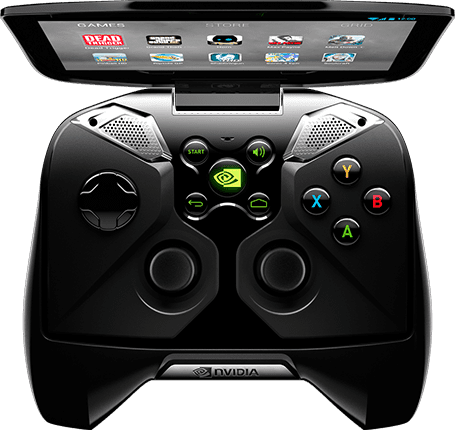
    NVIDIA Console Project Shield


    GAMING UNLEASHED


    Take your gaming anywhere with Project SHIELD, a gaming portable designed for gamers who yearn to play when, where and how they want. With the advanced processing power of NVIDIA® Tegra® 4, a full-size game controller, breakthrough Wi-Fi technology, and stunning HD video and audio, Project SHIELD redefines what gaming can be.

    Features :


    NVIDIA® Tegra® 4

    THE WORLD'S FASTEST

    MOBILE PROCESSOR

    Custom 72-core NVIDIA GeForce® GPU
    Quad-core A15 CPU

    Controller

    HOW GAMES WERE
    MEANT TO BE PLAYED

    Ultimate control and precision with a full-size console-grade game controller


    Multi Touch Display

    YOUR GAMES HAVE NEVER LOOKED SO GOOD

    5-inch 720p retinal multi-touch display for high fidelity visuals


    Intigrated Speakers

    TURN UP YOUR GAME

    Custom, bass-reflex, tuned port audio system delivers fidelity and custom range never before experienced on a portable device 

    Wi-Fi Connectivity

    NO LAG MEANS NO EXCUSES

    802.11n 2x2 MIMO game-speed Wi-Fi provides high-bandwidth, ultra-fast wireless for seamless game streaming


    Android Jelly Bean 

    Android Jelley bean

    PURE ANDROID, SO NOTHING GETS IN YOUR WAY

    Project SHIELD is stocked with the latest Android Jelly Bean operating system from Google, providing access to all your favorite Android applications and games


    _____________________________________
    Like Us On --> www.facebook.com/weezytechstuff/
    subscribe Us on YouTube--> www.youtube.com/user/WeezyTechStuff